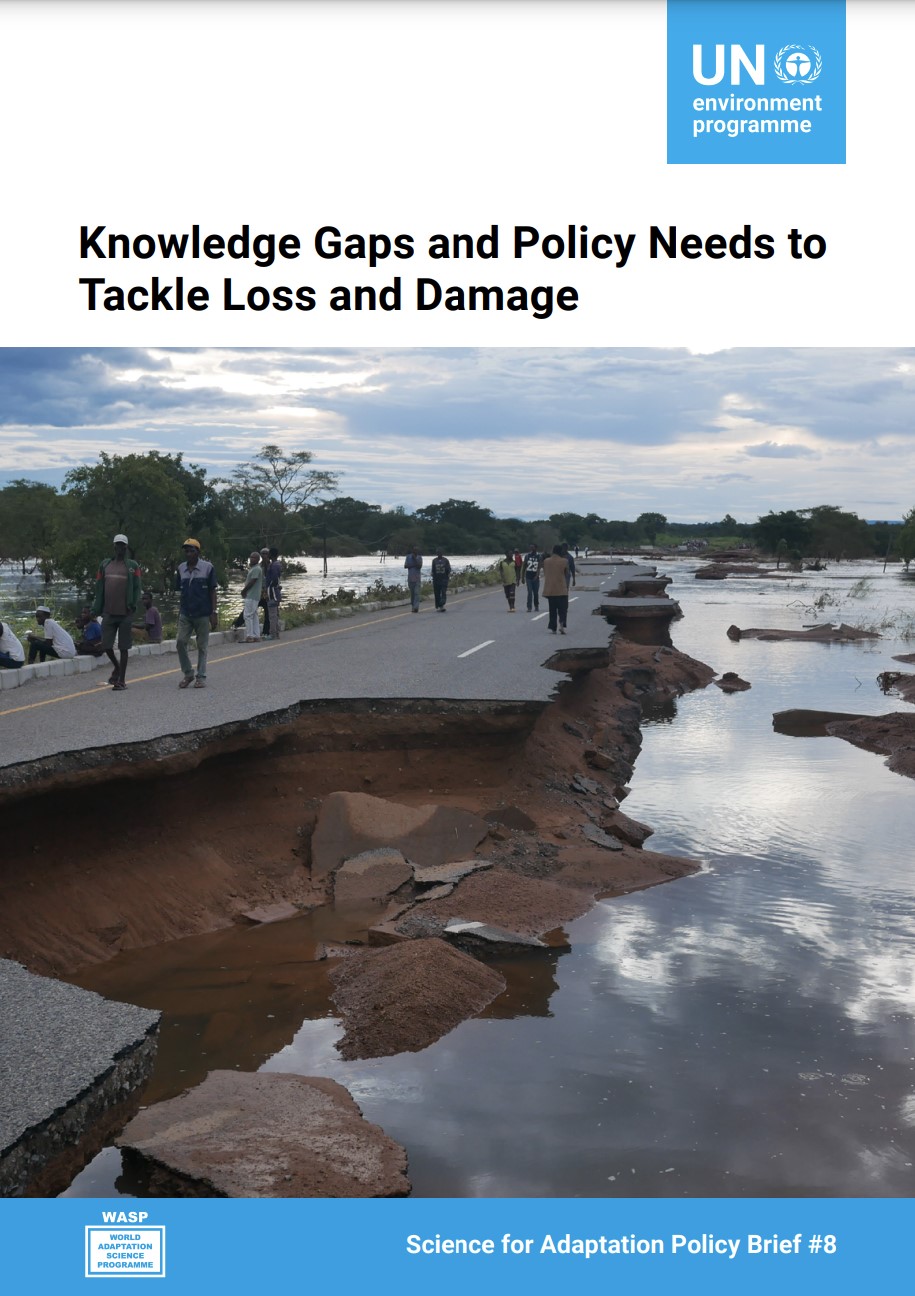
Key messages: 1. Climate change results in substantial loss and damage to societies and natural systems when it is not mitigated by reducing greenhouse gas emissions or averted through adaptation. Loss of life, extinction of species and ecosystem destruction are a few of the irreversible repercussions already attributed to unabated climate change...
- Clear all
- Type: (-) Policy Brief
Results 1 - 10 of 114 (Sorted by date)
The year 2023 marked a concerning milestone in climate history with the global average temperature being 1.45 ± 0.12°C above the pre-industrial average. The Global Stocktake at COP28 showed that the projected temperature rise is expected to be between 2.1 - 2.8°C even if nationally determined contributions (NDCs) of all countries are fully achieved...
Keywords:
This policy brief focuses on the international collaboration necessary to equitably progress towards the sustainable energy transition. In that context, it addresses SDG 12 - responsible consumption and production, and in particular SDG target 12.2 - achieving sustainable management and efficient use of natural resources. Based on recent research...
2023年のCOP28で実施されたグローバル・ストックテイクの成果文書では、世界のこれまでのGHG排出量推移は、世界の気温上昇を1.5℃に抑える努力を追求するというパリ協定の目標と合致するものではなく、既存の約束を実施する余地・機会が急速に狭まっているとしている。そして、GHGの大幅で速やかかつ持続的な削減が必要であり、すべての締約国に対して、世界全体の努力への貢献を求めると共に、次期の国別削減目標(国が決定する貢献:NDC)を1.5℃目標と整合するものとするよう奨励している。これを踏まえ、2024年6月17日に発表されたG7プーリア・サミットの首脳コミュニケ において、日本を含むG7各国は「1.5℃に整合した野心的なNDCを提出することにコミット」を表明している。 では...
Keywords:
Accounting for around 40 per cent of the world’s economy, 30 per cent of its energy demand and 25 per cent of energy system CO2 emissions, the G7 is called to play a leading role in building consensus towards implementing the goals of the 2015 Paris Agreement. This policy brief argues for the urgency for the G7 to intensify its climate ambition...
Evaluating the effectiveness of adaptation policies and actions is key to understanding whether they have reduced climate risks and achieved other intended outcomes. The goals are to ensure that adaptation is adequate to address climate risks, do not foster negative unintended consequences over space and time, and inform adaptation financing. The...
The International Energy Agency estimates that to hit net-zero globally by 2050, six times more critical minerals will be required in 2040 than today. The rapid increase in demand for critical minerals is likely to increase price volatility. This could aggravate energy security concerns, and thereby delay the necessary clean energy transition...
Keywords:
T7/G7 Task Force 2 Wellbeing, Environmental Sustainability, and Just Transition Policy Brief
Integrating the Sustainable Development Goals (SDGs) into climate actions is essential for a healthy planet and people. Yet, national climate policies and international climate support programs often fail to explicitly recognize the interconnections between climate concerns and other priorities covered under the SDGs. This failure can leave key...
T7 Policy brief: Task Force on Wellbeing, Environmental Sustainability, and Just Transition As the world’s most developed economies, the Group of Seven (G7) countries play a crucial role in leading the transition to net-zero, which necessitates the use of critical minerals (CMs) in various clean energy applications. However, the growing demand for...
Keywords:
T20 2022 Policy Brief
The circular economy transition along global value chains provides levers that can curb raw material use, preserve biodiversity, and reduce pollution, including the emission of greenhouse gases (GHGs). While the transition to circularity is building momentum, several systemic barriers continue to exist. This policy brief presents eight proposals...