Achieving a sustainable society requires the transition to a circular economy model based on the principles of resource circulation, waste minimisation, extended product lifespans and material reuse. IGES is involved in international processes to support this transition by conducting practical and policy-oriented research activities, as well as promoting technical support and capacity building for integrated waste management at the national and urban levels in Asian countries.
Related Links


Related Publications

Related Events
Past Event

COP29 Japan Pavilion Side Event
Shaping Global Standards through Circular Economy and Resource Efficiency Principles (CEREP) and Global Circularity Protocol (GCP)
As included in the outcome of the first Global Stocktake at COP28, circular economy approaches are recognized as an indispensable tool for climate solutions. The essential role of businesses in promoting global circularity, thereby meeting...
Past Event
Breaking the Plastic Habit in ASEAN Countries: Project Phase II ‐ Expanding the Application of Behavioural Insights to Reduce Single-use Plastic Waste in Cities and Communities in Asia
Plastic is pervasive in modern life, making its reduction a complex societal challenge. Reducing plastic consumption will necessitate substantial shifts in societal behaviour, supported by increased public awareness of the environmental and health...
Past Event

Adopting Integrated Solid Waste Management towards Zero Waste Cities
Summary The Institute for Global Environmental Strategies (IGES) and the United Nations Environment Programme (UNEP) recently convened a webinar titled "Adopting Integrated Solid Waste Management towards Zero Waste Cities" on March 27, 2024, in...
Related Projects
Project
Updated: February 2025
1.5°C Lifestyles
IPCC’s special report on global warming, launched in 2018, emphasized that in order to limit global warming to 1.5C or below, we should achieve net zero CO2 emissions by 2050. To achieve this ambitious target, CO2 emissions reductions across both pro
Project

Updated: December 2024
Circular Economy and Resource Efficiency
In recent years, circular economy (CE) and resource efficiency (RE) have become central to the G7 / G20 process and the sustainable development agenda, as well as the response to climate change. A circular economy aims to realise resource circulation...
Project
Updated: December 2024
IGES and Climate Security: Asia-Pacific Climate Security Project
The climate security featured page will share research findings and related information on climate security. We are exploring various topics, including international trends analysis, energy security, food security, climate-induced human mobility, cl
Related News
Announcement
Six ASEAN partners selected for ‘Breaking the Plastic Habit in Asia’ project (Phase II)
Tokyo/Jakarta 20 September 2024 IGES and the Regional Knowledge Centre for Marine Plastic Debris of ERIA (the Economic Research Institute for ASEAN and East Asia) have announced the launch of Phase II of the ‘Breaking the Plastic Habit in Asia’...
Announcement
Call for Proposals Breaking the Plastic Habit in Asia: Piloting the Application of Behavioural Insights for Plastic Reduction
IGES is launching Phase II of the Breaking the Plastic Habit in Asia project to test the effectiveness of behaviour-centred interventions to reduce the use and waste of single-use plastics in cities and communities. The project is conducted in close...
Announcement
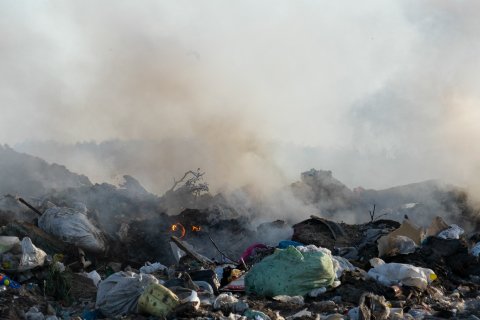
IGES and Its Partners Launch Global Project to Cease Open Waste Burning for Mitigation of Air Pollution, Climate Change and Health Risks
IGES, in partnership with Engineering X, the International Solid Waste Association (ISWA), Practical Action and UN Habitat, announces the launch of a ground-breaking project “Creating the enabling conditions for eliminating open burning of waste...