

Senior Policy Researcher (Water and Adaptation)
Research Topics & Areas of Expertise
- Adaptation communication of indigenous and local knowledge
- Capacity building to promote climate change adaptation such as gap assessments, developing new approaches of capacity building
- Disaster risk management and planning
- Integrated implementation of SDGs using river basin approaches
Education
EDUCATION
Dr.Eng. (Urban and Environmental Engineering), Kyoto University, Japan (2004-2007);
M.Sc. (Agriculture Systems & Engineering/Integrated Watershed Management), Asian Institute of Technology (AIT), Thailand (2002-2004);
B.Sc. Agriculture, Institute of Agriculture and Animal Science, Tribhuban University, Chitwan, Nepal (1998-2001);
WORKING EXPERIENCES:
July 2017 - Current: Senior Water and Adaptation Specialist, IGES
April 2010 - June, 2017: Policy researcher/Water Resources Specialist, IGES
October 2009 - March 2010: Researcher at Global-COE Sustainability / Survivability Science for a Resilient Society Adaptable to Extreme Weather Conditions (GCOE-ARS), GSGES, Kyoto University
April 2009 - September 2009: Researcher at Global-COE Human Security Engineering for Asian Megacities (GCOE-HSE), GSGES, Kyoto University;
October 2007-March 2009: Researcher at Research Center for Environmental Quality Management (RCEQM), Kyoto University;
Results 41 to 50 of 124 (Sorted by date)
Discussion Paper

Global support for promoting adaptation, both in terms of technical and financial assistance is growing, though only a few countries have reached the stage of submitting their NAPs. Developing effective NAPs is a complicated process requiring a great deal of financial and technical resources, much akin to the implementation of environmental...
Conference Proceeding

The 11th Regional Conference on Environmental Engineering 2018 and the 3rd International Symposium on Conservation and Management of Tropical Lakes “Enhancing Sustainability and Resilience under Anthropogenic Pressure and Climate Change
The Tonle Sap Lake (TSL) is among the most productive freshwater ecosystems, and one of the most fish- abundant lakes in the world. It is connected with the Mekong River by Tonle Sap River. The TSL absorbs a huge volume of water, which helps to reduce flooding in the Mekong River floodplains during the peak flooding season, then releases water into...
Conference Paper

Stockholm World Water Week 2018 Session on "Groundwater-based natural infrastructure solutions: The missing link to resilience?"
Kumamoto is a rare case of fully functional PES for over 13 years; Willingness between buyers and sellers is one of the basic conditions for establishing PES. However, willingness are always not sufficient condition for groundwater recharge, which are difficult to quantify and verify; Role of intermediary institutions such as local agriculture...
Briefing Note

Payments for ecosystem services (PES) is a market-based mechanism aimed at sustaining the flow of such services. Through a PES scheme, beneficiaries or users of the ecosystem service(s) compensate the provider or manager of those services, directly or indirectly. The provider and beneficiaries agree on the terms and conditions of the PES and...
Research Report
APN Research Report
Today, 54% of the world’s population live in urban areas, a proportion that is expected to increase to 66% by 2050. Major cities and municipalities in the region rely either fully or partially on groundwater. Four highly relevant Asian cities (Bangkok, Bandung, Ho Chi Minh and Lahore) were selected which bear groundwater dependency in the range of...
Policy Report
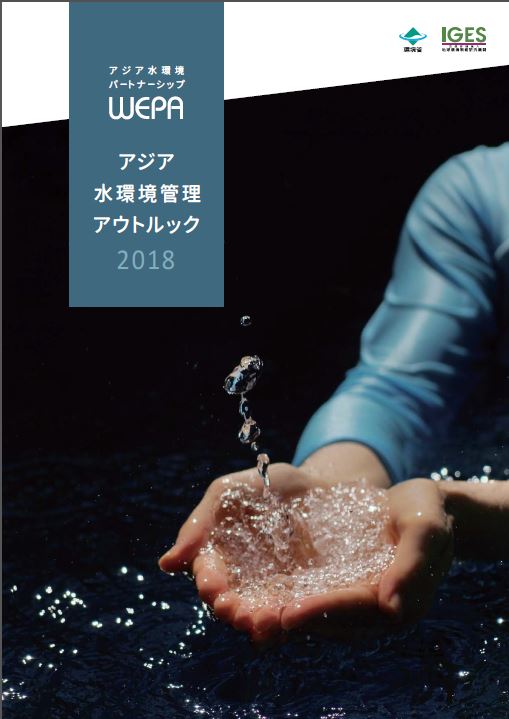
アジアの国々は、居住環境の悪化、利用可能な水の減少および水の生態系サービスの損失につながる、深刻な水質汚濁問題に直面し続けている。これらの状況を考慮し、ガバナンスの観点から水質汚濁問題を解決することを目的とし、第3 回世界水フォーラムの場で日本国環境省によりアジア水環境パートナーシップ(WEPA)が提案された。WEPAでは2004年から、アジア13カ国のパートナー国(カンボジア、中国、インドネシア、日本、韓国、ラオス、マレーシア、ミャンマー、ネパール、フィリピン、スリランカ、タイ、ベトナム)の協力のもと、水環境問題問題を解決するために、関係者の能力向上及び解決策の情報・知識共有を行ってきた。 アジア地域の水質に関する問題を解決するためには...
Commissioned Report
平成29年度 国連持続可能な消費と生産10年計画枠組み「持続可能なライフスタイル及び教育」プログラムの運営支援等委託業務に関する報告書。
Policy Report

This report is the fourth edition of the series “WEPA Outlook on Water Environmental Management”, which consists of two main chapters: Chapter 1 -“Outlook on Water Environmental Management in WEPA Countries” and Chapter 2 - “Country Profiles of Water Environmental Management in WEPA Countries”. The first chapter presents the results of analysis on...
Commissioned Report
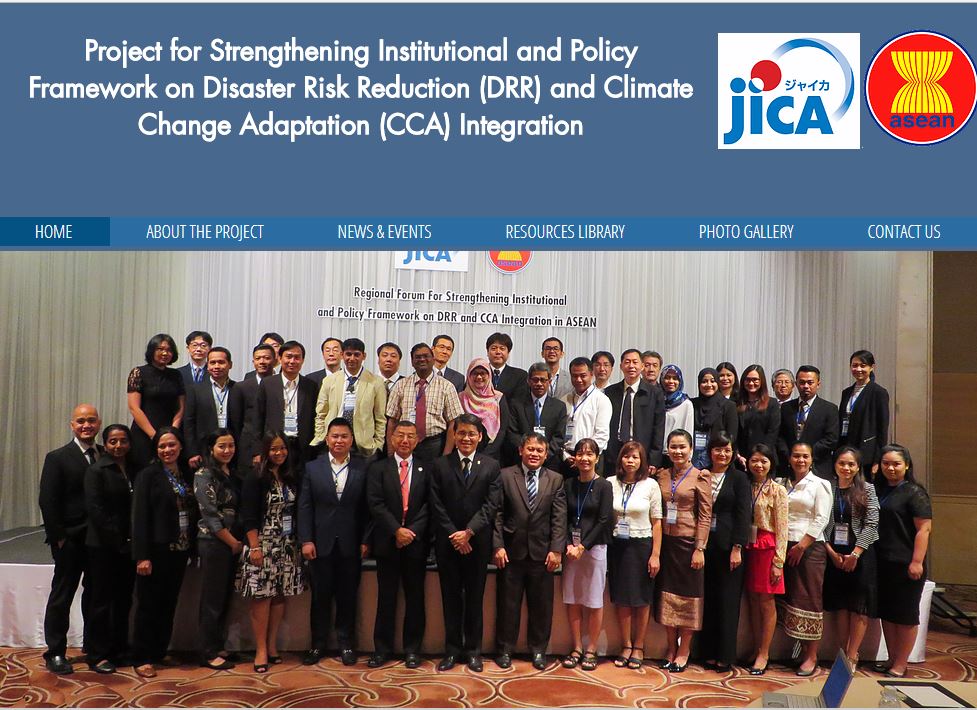
The Project for Strengthening Institutional and Policy Framework on Disaster Risk Reduction (DRR) and Climate Change Adaptation (CCA) Integration (termed as CN20 Project), which complies with the Concept Note (CN) 20 of the 21 Flagship and Priority Projects of the ASEAN Agreement on Disaster Management and Emergency Response (AADMER) Work Programme...
Presentation
Training Programmme on Climate Change for Bhutanese Policymakers
In collaboration with the Institute for Global Environmental Strategies, Japan (IGES), NIES has worked with Bhutan for years to address the adverse impacts of climate change. On February 5-8, 2018, IGES delivered a training program for policymakers, and the Asia-Pacific Climate Change Adaptation Information Platform (AP-PLAT) coordinated lectures...
No Projects Found.